
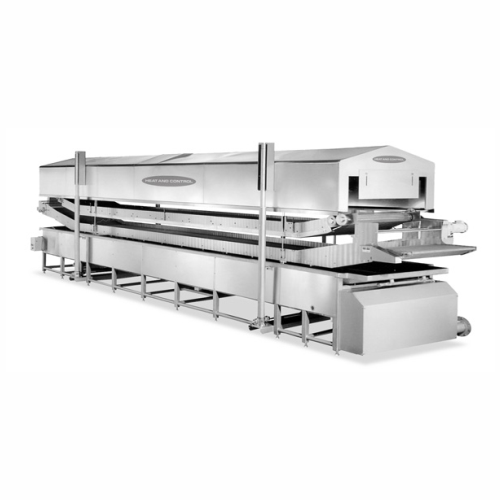
Boiling equipment is an essential part of many industrial and commercial cooking processes, designed to facilitate the efficient heating and boiling of liquids. This equipment is crucial in various sectors, including food processing, pharmaceuticals, and chemical manufacturing, where precise temperature control and consistent boiling are vital for product quality and safety.
The primary function of boiling equipment is to provide a controlled environment for cooking, sterilizing, and extracting flavors or compounds from ingredients. With advancements in technology, modern boiling equipment has become more efficient, versatile, and user-friendly, allowing operators to optimize their processes and enhance productivity. Understanding the different types of boiling equipment and their applications is key for businesses looking to improve their operations and deliver high-quality products to the market.
We are continuously updating the information on our website to serve you better! If you’re seeking details about our equipment or have any specific inquiries, please don’t hesitate to reach out to us at info@foodtecpro.com. Our dedicated team is ready to assist you, and one of our managers will get in touch with you shortly to provide the information you need. Thank you for your patience and support!
Boiling Equipment

Boiling Equipment

Boiling Equipment

PROCESS SOLUTIONS
Material Preparation
Material Sorting and Organization
Material Handling
Mixing, Blending and Agitation
Heating and Cooking
Cooling and Preservation
Separation and Filtration
Forming and Shaping
Coating and Decorating
Packaging and Sealing
Automation and Control
Sanitation and Cleaning
Inspection and Quality Control
Storage and Preservation
Chemical and Advanced Processes
- Blowing Equipment
- Carbonation Equipment
- Concentration Equipment
- Crystallization Equipment
- Dissolution Equipment
- Evaporation Equipment
- Extraction Equipment
- Distillation Equipment
- Fermentation Equipment
- Encapsulation Equipment
- Degassing Equipment
- Dehumidifying Equipment
- Dehydration Equipment
- Bio-Decontamination Equipment
Waste Management and Recovery
Final Processes and Finishing

Join Us at Global Exhibitions Near You
We’re excited to showcase our latest innovations and solutions at exhibitions around the world! These events are the perfect opportunity to connect with our team, explore our cutting-edge technologies, and discover how we can support your business needs. Join us at a location near you and experience firsthand how we’re shaping the future of industries. We look forward to meeting you!
Boiling Equipment
Boiling equipment is vital in various industries, designed to heat liquids to their boiling point for purposes such as cooking, sterilization, extraction, and chemical processing. This equipment is particularly important in sectors like food and beverage, pharmaceuticals, and chemical manufacturing, where precise temperature control and consistent boiling are essential for achieving desired results and ensuring product safety.
The effectiveness of boiling equipment can significantly impact the quality and flavor of food products, the efficacy of pharmaceutical preparations, and the efficiency of chemical reactions. By utilizing advanced technologies, modern boiling equipment enhances productivity while maintaining energy efficiency and safety standards.
Types of Boiling Equipment
- Steam Boilers. Steam boilers generate steam by heating water, which can then be used for cooking or heating applications. They come in various designs, including fire-tube and water-tube boilers, each suited for different operational needs. Applications: Widely used in commercial kitchens for steaming vegetables, cooking pasta, and providing heat for other cooking processes.
- Boiling Vessels (Kettles). Industrial boiling vessels, often referred to as kettles, are large containers designed for boiling liquids. They may have direct or indirect heating systems and often come equipped with temperature controls for precision. Applications: Commonly used in food manufacturing for boiling soups, sauces, and other liquid-based products.
- Stock Pot Stoves. These heavy-duty stoves are designed to accommodate large stock pots and provide high heat output for rapid boiling. They are often used in commercial kitchens and food processing facilities. Applications: Ideal for boiling large batches of stocks, broths, or pasta, particularly in high-volume operations.
- Vacuum Boiling Equipment. Vacuum boiling equipment operates under reduced pressure, lowering the boiling point of liquids. This method is useful for preserving flavors and nutrients while preventing degradation of sensitive ingredients. Applications: Frequently used in the food industry for cooking fruits, vegetables, and other products that require gentle boiling.
- Continuous Boiling Systems. These systems are designed for continuous operation, allowing liquids to be boiled and processed in an uninterrupted flow. They often utilize advanced controls for precise temperature and flow management. Applications: Common in chemical manufacturing and food processing, where large quantities of liquids need to be boiled consistently.
- Induction Cookers. Induction cookers use electromagnetic energy to directly heat pots and pans, providing rapid and efficient boiling without traditional burners. They offer precise temperature control and quick response times. Applications: Used in commercial kitchens for boiling or simmering, particularly when rapid temperature adjustments are required.
Benefits of Boiling Equipment
- Efficiency: Modern boiling equipment is designed to maximize energy efficiency, reducing operational costs while maintaining high levels of performance.
- Precision Control: Advanced boiling equipment allows for accurate temperature control, ensuring that liquids are boiled at the desired temperature for optimal results.
- Versatility: Various types of boiling equipment can accommodate different applications, from food preparation to chemical processing, making them adaptable to diverse operational needs.
- Improved Quality: By providing consistent boiling conditions, this equipment helps enhance the flavor, texture, and safety of food products, leading to higher-quality end results.
Boiling equipment is essential for achieving desired cooking, sterilization, and processing outcomes across various industries. From steam boilers and boiling vessels to vacuum boiling systems and induction cookers, these tools are designed to optimize the boiling process while ensuring efficiency and quality. Understanding the various types of boiling equipment and their applications enables businesses to enhance their operations and deliver high-quality products to the market. As industries continue to evolve, investing in advanced boiling solutions will remain crucial for maintaining competitive advantages and meeting consumer demands.


